Don’t get deceived by AWS’s new “Database Load” metric
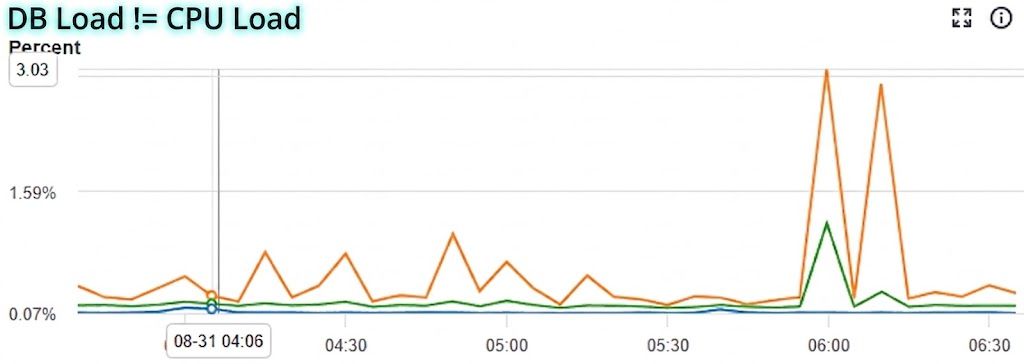
Don’t get deceived by AWS’s new “Database Load” metric.
Recently, AWS sunsetted RDS Performance Insights in favor of CloudWatch Database Insights.
I’m sure there was some benefit but they hit me with the mother of all red herrings during a recent fire fight.
I was digging in deep looking for the source of a latency spike in a pretty massive server infrastructure.
When you're running through thousands of disparate metrics trying to parse literally millions of data points things can get overlooked.
For the most part, I feel like I know AWS metrics and the systems I design like the back of my hand but every once in a while, when AWS changes things I have to slow down and read up.
Unfortunately, this change lead the team I was working with and myself to confuse their new Database Load stat for CPU Load.
Normally, when you're looking at stats, CPU load and Memory Usage are two of the top stats. For ECS, unless you have turned on the more advanced insights, that is the only stat you get.
As it turns out, Database Load (AKA “DB Load”) measures the level of session activity in your database. Completely different than CPU utilization.
Personally, I think making DB Load the top stat in the console when CPU load has been the top stat for so long was a really poor UI decision.
Fortunately for me, my persistence paid off, and subsequent debugging led me back to the resources that we had originally marked off as having low CPU load, when it really was low DB Load and we managed to pin point it.